Modern Access Control Systems: A Guide to Turnstiles
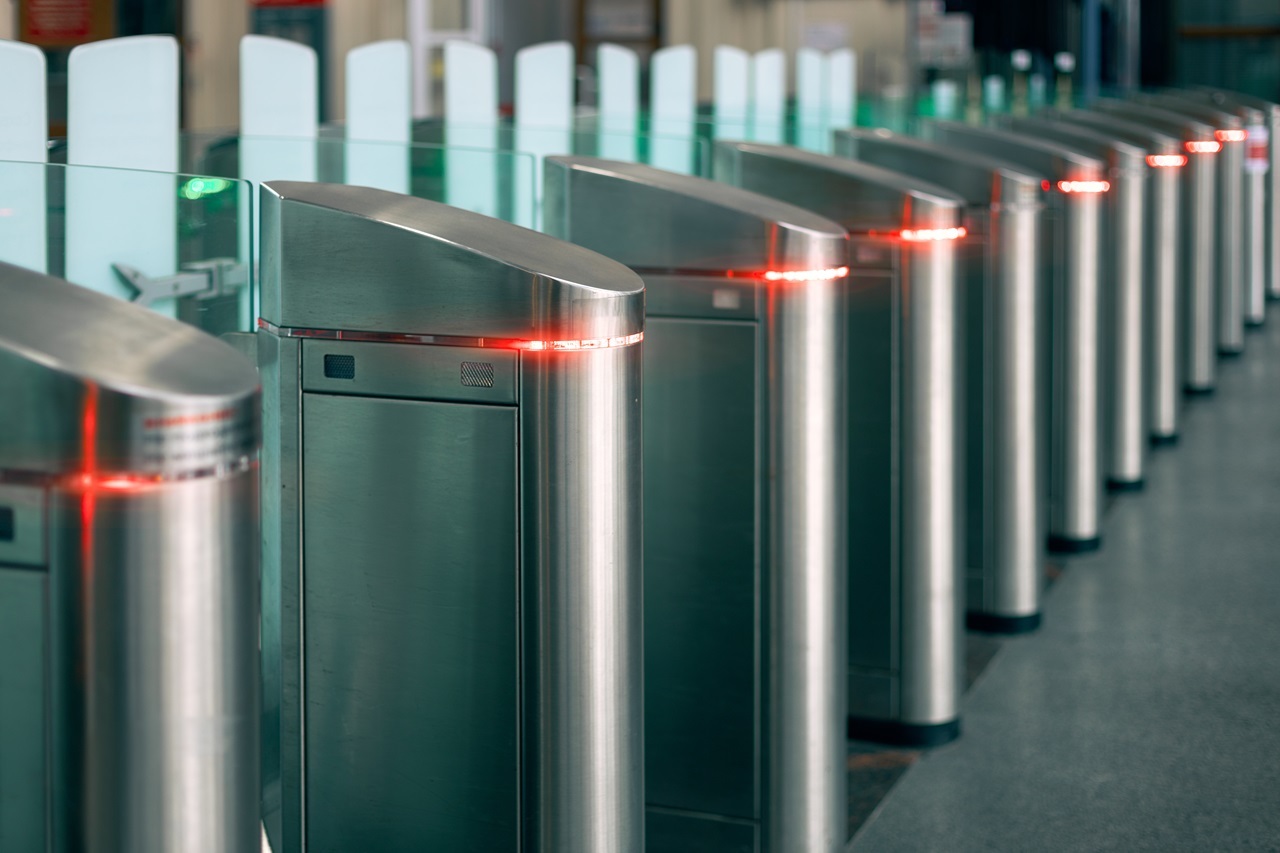
Table of Contents
Turnstiles as Modern Access Control Solutions
Turnstiles are a crucial component of modern access control systems, playing a key role in securing public facilities, office buildings, and commercial premises. They represent a major step forward in the ability to control and monitor the movement of people within a defined area. Thanks to their reliability and effectiveness, turnstiles have quickly become a standard solution for managing access and enhancing security.
Typically manufactured from stainless steel for maximum durability, turnstiles are available in various designs, ranging from low-height models that mainly regulate pedestrian direction to full-height turnstiles that completely block access without proper authorization such as a ticket, access card, or contactless wristband. Full-height turnstiles are commonly used at airports and stadiums, while swing or low turnstiles are often found in retail stores, shopping malls, and ski resorts. Their use ensures that unauthorized individuals are clearly identified and directed for verification.
Types of Turnstiles Available on the Market
Turnstiles combine advanced technology with practical design and are available in multiple variants tailored to different environments and security requirements. Each type offers specific features while serving the same core purpose of controlling pedestrian flow.
Low-height turnstiles are the most basic models and are primarily used to guide movement and maintain orderly flow in public spaces. Full-height turnstiles provide a high level of security by physically preventing access without authorization and are ideal for high-risk or restricted areas. Swing turnstiles are commonly used in retail environments and leisure facilities, where access control is needed without creating a restrictive or unwelcoming atmosphere. Regardless of the type, all turnstiles provide effective access control and contribute to improved security.
Functions and Benefits of Turnstiles
Turnstiles perform several essential functions that have been widely adopted by organizations around the world. Their primary role is to control access points and regulate the flow of people, ensuring that only authorized individuals can enter designated areas. This makes them a highly effective tool for maintaining security.
Another major advantage of turnstiles is their durability and reliability. Constructed from high-quality materials such as stainless steel, they are resistant to damage and designed for long-term, fault-free operation. By combining robust construction with advanced technology, turnstiles offer a dependable solution that enhances both safety and the professional appearance of a facility. As an investment, they deliver long-term value by improving security standards and operational efficiency.
Turnstiles in Practice: Real-World Applications
Turnstiles have become an integral part of access control across a wide range of industries and facilities. Their practical applications reflect a balance of advanced technology and high functionality.
Airports rely on full-height turnstiles to secure restricted zones and manage passenger flow with a strong focus on safety. Stadiums use turnstiles to control entry, monitor attendance, and prevent unauthorized access during mass events. Shopping malls and retail stores often install low-height or swing turnstiles to track customer numbers and manage movement without disrupting the shopping experience. Office buildings use turnstiles to regulate access for employees, visitors, and service providers, significantly increasing overall security and preventing unauthorized entry.
Security and Technology Used in Turnstiles
Modern turnstiles integrate advanced security technologies to provide reliable and efficient access control. Common features include card readers, biometric scanners, and facial recognition systems, all designed to prevent unauthorized access while ensuring smooth passage for authorized users.
High build quality and durable materials such as stainless steel ensure long service life and minimal maintenance requirements. Many turnstiles also support remote management and system monitoring, making them suitable for large public facilities, offices, shopping centers, stadiums, and airports. With turnstiles in place, security is maintained consistently while technology supports people rather than restricting them.
Selecting and Installing Turnstiles
When choosing turnstiles, several key factors should be carefully considered. The type of turnstile must match the specific requirements of the facility and the desired security level. Full-height turnstiles are ideal for high-security environments such as airports and stadiums, while swing turnstiles are better suited for retail spaces, shopping malls, and leisure facilities where user comfort is important.
Proper placement is equally important to ensure smooth pedestrian flow and effective access control. Durability and reliability should also be prioritized, with preference given to turnstiles made from high-quality materials. Installation is the final critical step and should always be carried out by experienced professionals to guarantee correct system operation.
Key considerations for selection and installation include assessing the specific needs of the site, choosing the appropriate turnstile type, verifying material quality and durability, and ensuring professional installation. A well-chosen and properly installed turnstile system provides long-term security, efficiency, and control over access to any facility.